Web applications that stay fast as they get complicated.
Marketing sites that load instantly and web apps that hold up under real data. We build on Next.js, React, and TypeScript — architected so the thing you ship in month three doesn't make month twelve harder.

You're probably here because…
These are the situations teams are usually in when they come to us about web & web apps. If more than one lands, we should talk.
- Your site is slow, and the CMS fights the marketing team every time they touch it.
- The business runs on a spreadsheet that should have been an application two years ago.
- An existing app has become expensive to change — every small request turns into a quote.
- Customers need a portal to see their own data, not another email thread.
- Core Web Vitals are hurting you in search and nobody has owned the fix.
The work, spelled out
No mystery line items. This is what we deliver and what you get to keep.
Marketing & content sites
Fast, accessible, SEO-ready sites on a headless CMS, so your team can publish without booking developer time.
Customer portals & dashboards
Authentication, roles, and permissions over your real data — the self-serve layer that takes work off your inbox.
Internal tools & SaaS
The operations software nobody sells off the shelf, built around how your business actually runs.
Headless CMS integration
Payload, Shopify as a backend, or the stack you already have — with an editing experience your team will use.
Performance, accessibility & SEO
Measured against real budgets and fixed, not asserted in a proposal and forgotten after launch.
Takeover & rescue
We inherit codebases other teams left behind: audit first, stabilise second, then get moving again.
How this looks in practice
When the website becomes the product
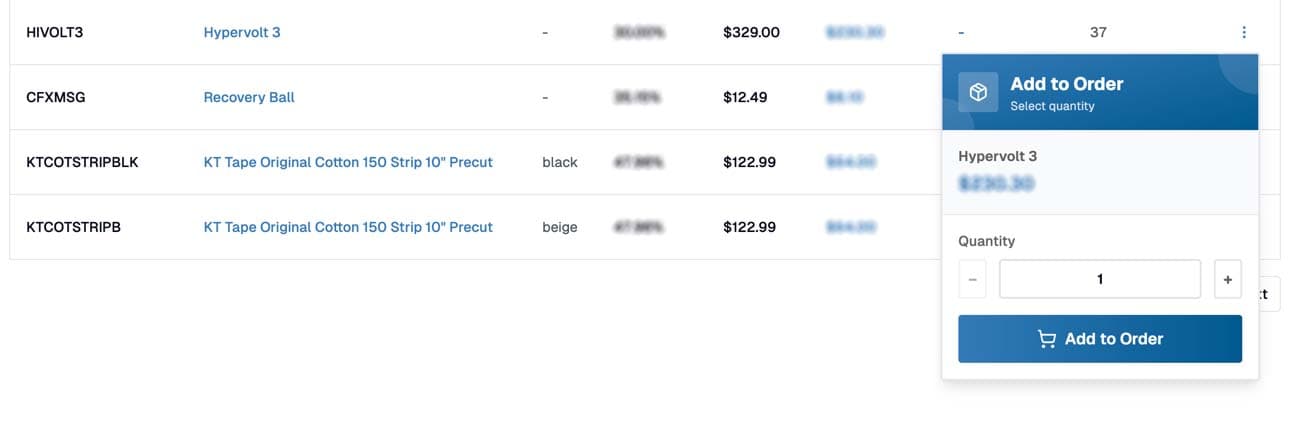
The line between a marketing site and an application is thinner than most teams expect. The 360 Athletics dealer portal started as a way to stop taking wholesale orders by email — it became the system dealers log into for tiered pricing, backorders, and rental contracts, sharing a stack with the public-facing site.
- Authentication, roles, and per-customer pricing
- Data-heavy tables that stay fast at real volume
- One stack behind both the public site and the portal
- Integrated with a legacy ERP rather than replacing it

No lock-in to us
TypeScript end to end, a conventional project structure, and documented deployments. If you bring the work in-house or hand it to another team, they should be productive in a week. We would rather be kept because the work is good than because leaving is painful.
- Typed end to end — the codebase explains itself
- Conventional structure any Next.js developer will recognise
- Documented environments and deployments
- You own the code, the repos, and the infrastructure
What we do differently here
The choices that decide whether this kind of work holds up a year later.
- 1
Map the domain before the UI
We model the data and the workflows first. Screens designed before the domain is understood get rebuilt.
- 2
Pick the boring architecture
Proven tools, conventional structure, rendering chosen per route. Novelty is a cost your future team pays.
- 3
Ship in reviewable slices
Working software in front of you throughout, not a reveal at the end. Direction changes get cheap.
- 4
Instrument, then tune
Real performance and error data after launch tells us what to optimise — instead of guessing.
What we build it with
Every tool here earned its place. The point isn't the logos — it's the reasoning behind them.
 Next.js
Rendering chosen per route — static where it can be, dynamic where it must be. Fast pages without giving up interactivity.
 React
ReactThe component model the whole team can hire for, and the one our mobile work shares.
 TypeScript
Types across the API boundary catch a whole class of bugs before they reach a browser.
 Tailwind CSS
A constrained design system in the markup — consistent spacing and colour without a growing stylesheet.
 Prisma
A typed data layer, so a schema change surfaces as a compile error rather than a 2am incident.
 PostgreSQL
Relational data with real constraints. Boring, proven, and it scales further than most products ever need.
 Payload CMS
An editing experience marketing teams actually use, without handing the front end over to a page builder.
Global delivery, preview builds on every change, and no infrastructure for your team to babysit.
Work we've shipped
The same capability, already delivered for someone else.

360 Athletics Dealer Portal
We built 360 Athletics a custom dealer portal for their wholesale and distribution business, handling dealer pricing, backorders, purchase orders, and a full medical-device rental operation, all wired into their legacy ERP.
Linx Energy Partners
A specialized sales-training, retention, and recruitment partner for the energy sector, on a custom Next.js website.
Jenoir International
A leadership training and consulting firm providing seminars, keynotes, and leadership development, on a custom Next.js website.
Three ways we take on the work
Which one fits depends on the project — we'll recommend a shape after a discovery conversation, not before.
Project-based
A defined scope, an agreed timeline, and a fixed quote. We scope it after discovery, so the number means something.
Best forA defined build with a launch date.
Ongoing retainer
A recurring block of our time each month for continuous work — improvements, support, and whatever the roadmap needs next.
Best forContinuous product work after launch.
Time & materials
Billed for the time the work actually takes. Best when the scope will genuinely move as we learn.
Best forRescuing or extending an app whose scope is still unclear.
Web & Web Apps, specifically
The questions teams ask us most about this kind of work.
The rest of what we do
Most projects touch more than one of these. We cover the whole build.
Have an application in mind?
Tell us what it needs to do and we'll map out a clear path to ship it.